
Alaska Air sets goals for 2030
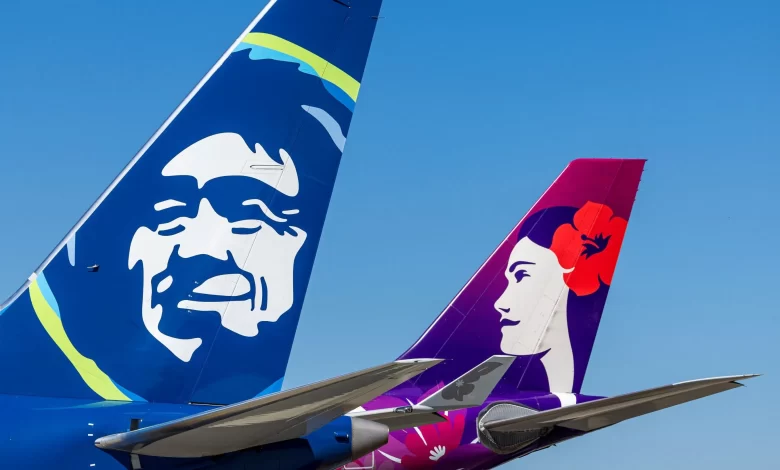
In its 2025 Impact Report, Alaska Air Group unveiled a new set of 2030 impact goals intended to unite Horizon Air, Hawaiian Airlines, and Alaska Airlines under a single framework for social impact and sustainability. The five-year plan seeks to improve the company’s resilience while producing favourable results for workers, visitors, communities, and the environment.
According to Ryan Spies, Managing Director of Sustainability at Alaska Airlines and Hawaiian Airlines, “flying carries a responsibility – to the communities that rely on us, to the places that shape us, and to the guests who trust us with their journeys.” He continued by saying that the group’s dedication to sustainable operations and community development is reinforced by the unified 2030 goals, which build on the advancements made by staff members.
Following the merger of Alaska and Hawaiian, Alaska Air Group is undergoing a major restructuring, which coincides with the new strategy. Alaska Airlines was granted a single operating certificate during the previous year, enabling Alaska and Hawaiian to function as separate brands inside the same organization. Hawaiian joined the OneWorld alliance, and the airlines also switched to a single passenger service system. The company’s largest-ever fleet order, the establishment of a new Global Training Center in Seattle, and the start of international operations to Europe were further significant events.
Alaska also launched the US$600 million+ Kahu’ewai Hawai’i Investment Plan to improve travel experiences throughout the Hawaiian Islands and became a cornerstone investor in a new US$150 million oneworld sustainable aviation fuel (SAF) investment fund in collaboration with Breakthrough Energy Ventures.
Over 58 million passengers travelled on over 543,000 flights operated by Alaska, Hawaiian, and Horizon in 2025. With almost 9.3 million gallons of gasoline saved over the course of the year, Alaska continued to be the most fuel-efficient premium airline in the United States. Additionally, average ground service equipment emissions were lowered by almost 50% from 2020 levels because to electrification investments. The group bought around 11 million gallons of SAF, which is a 52% increase over 2024.
Reducing greenhouse gas emissions by 10–14% from the 2019 baseline, allowing commercial-scale blended SAF delivery at Seattle-Tacoma International Airport, reaching an 80% in-flight recycling rate on Alaska and Horizon flights, and eliminating emissions from Scope 2 facilities are among the 2030 objectives.
Increasing the use of electric core ground equipment to 60% across SEA, PDX, SFO, LAX, and HNL; bolstering recycling and sustainable sourcing programs; preserving 40% local sourcing for Hawaii-originating onboard products; cutting the top five single-use plastics on Hawaiian Airlines flights; and balancing 100% water consumption across Alaska Air Group operations are additional goals.
The strategy also emphasises social impact, with over half of Alaska Star Ventures’ technology investments going toward lowering aviation emissions, bolstering wildlife protection policies, enhancing the belonging index, improving career pathways for 250,000 youth, and contributing 250,000 employe volunteer hours by 2030.